Strategy game · Free in browser
War Room
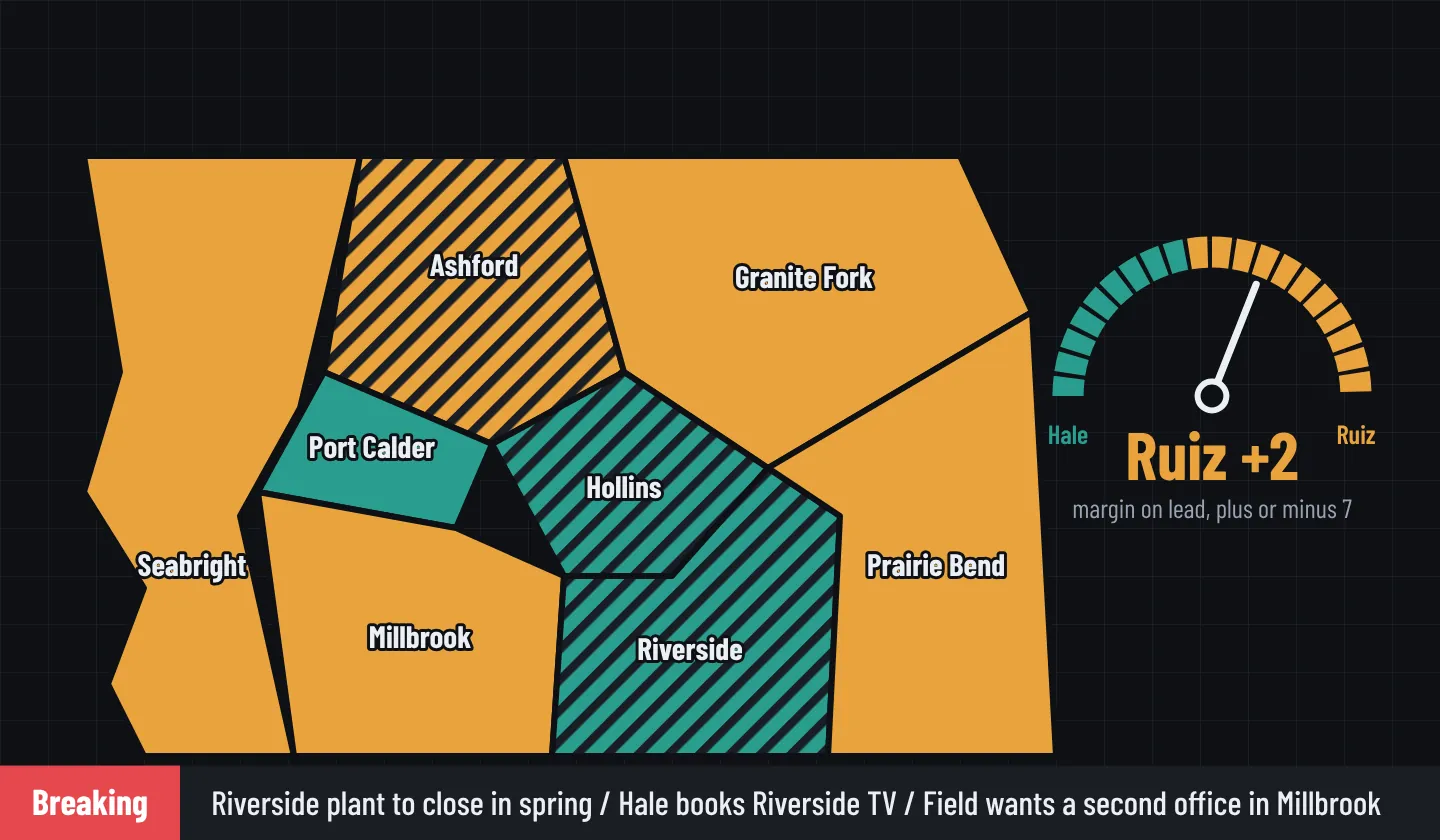
You are the campaign manager. You have fourteen weeks, a budget, a voter file you can't fully trust, a candidate who might not listen, and an opponent doing the same thing to you. Get to the win number.
In development: not playable yet
At a glance
- GenreCampaign management strategy
- SettingA fictional state, fictional parties
- PlayersSingle player against an AI campaign
- StatusIn development
Election-night war room
Design screens from development. Details will change before release.
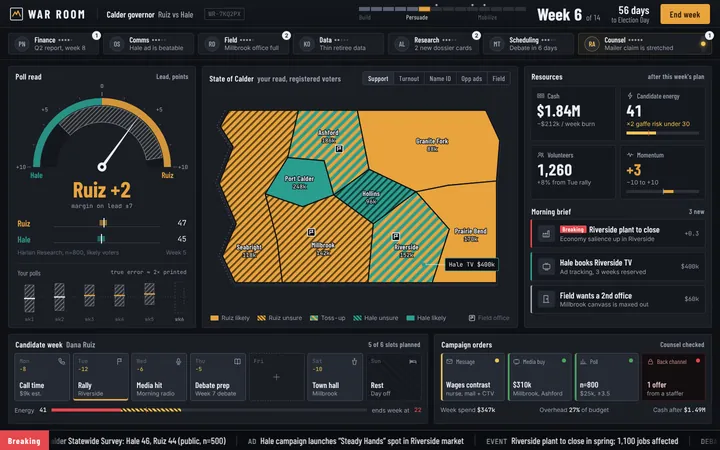
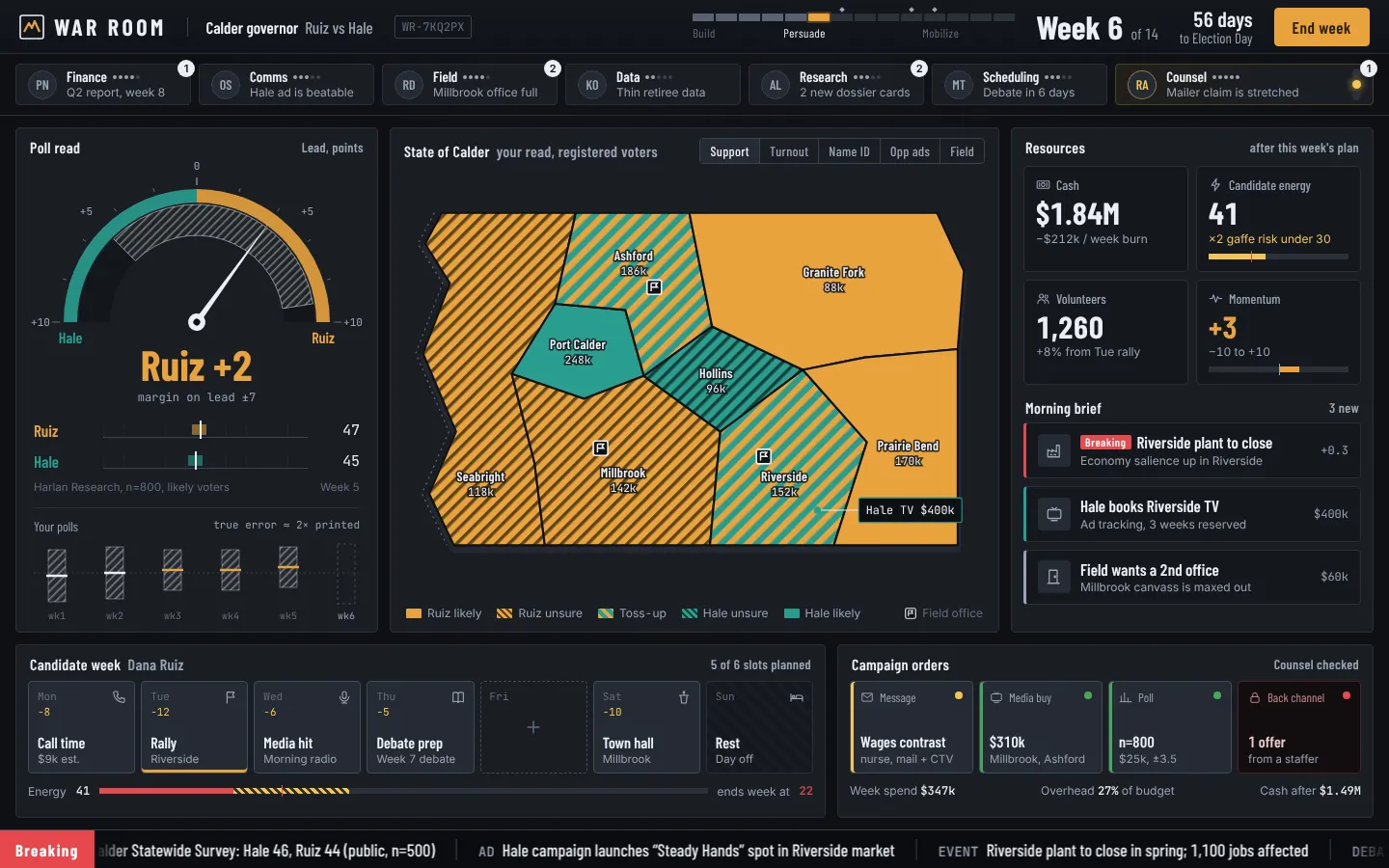
The war room. Your poll read, a county map of the fictional state of Calder, cash, volunteers and the candidate's week, all on one screen. 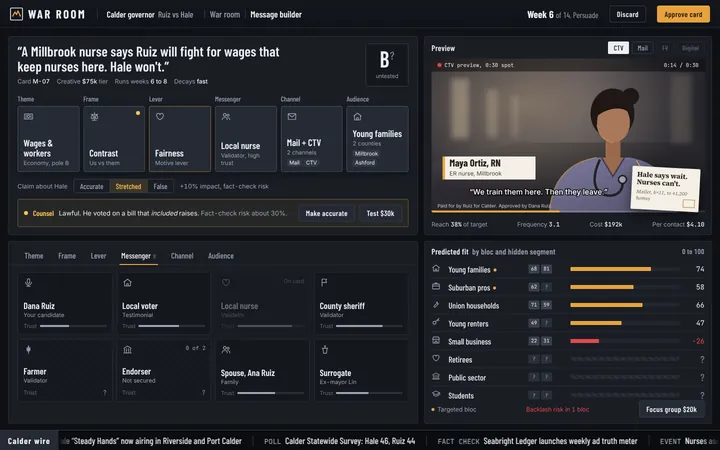
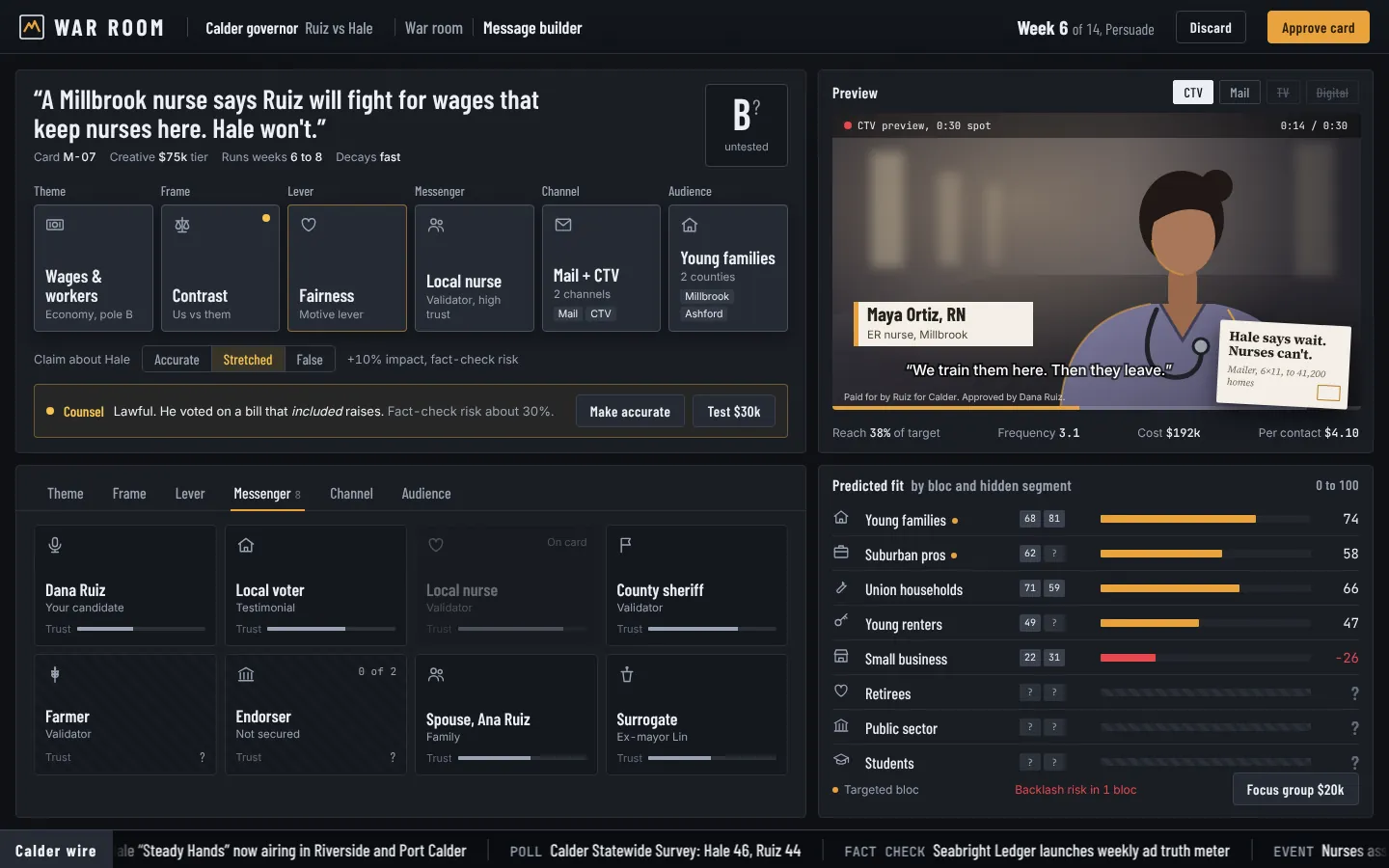
The message builder. Theme, frame, lever, messenger, channel and audience snap into one ad card. Counsel flags a claim that is stretched. 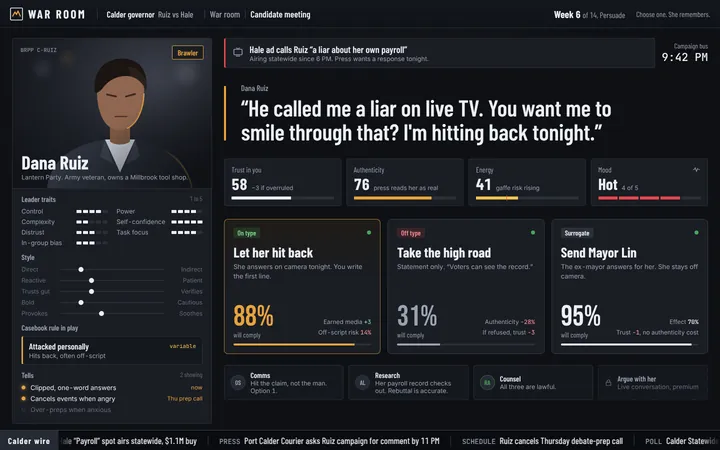
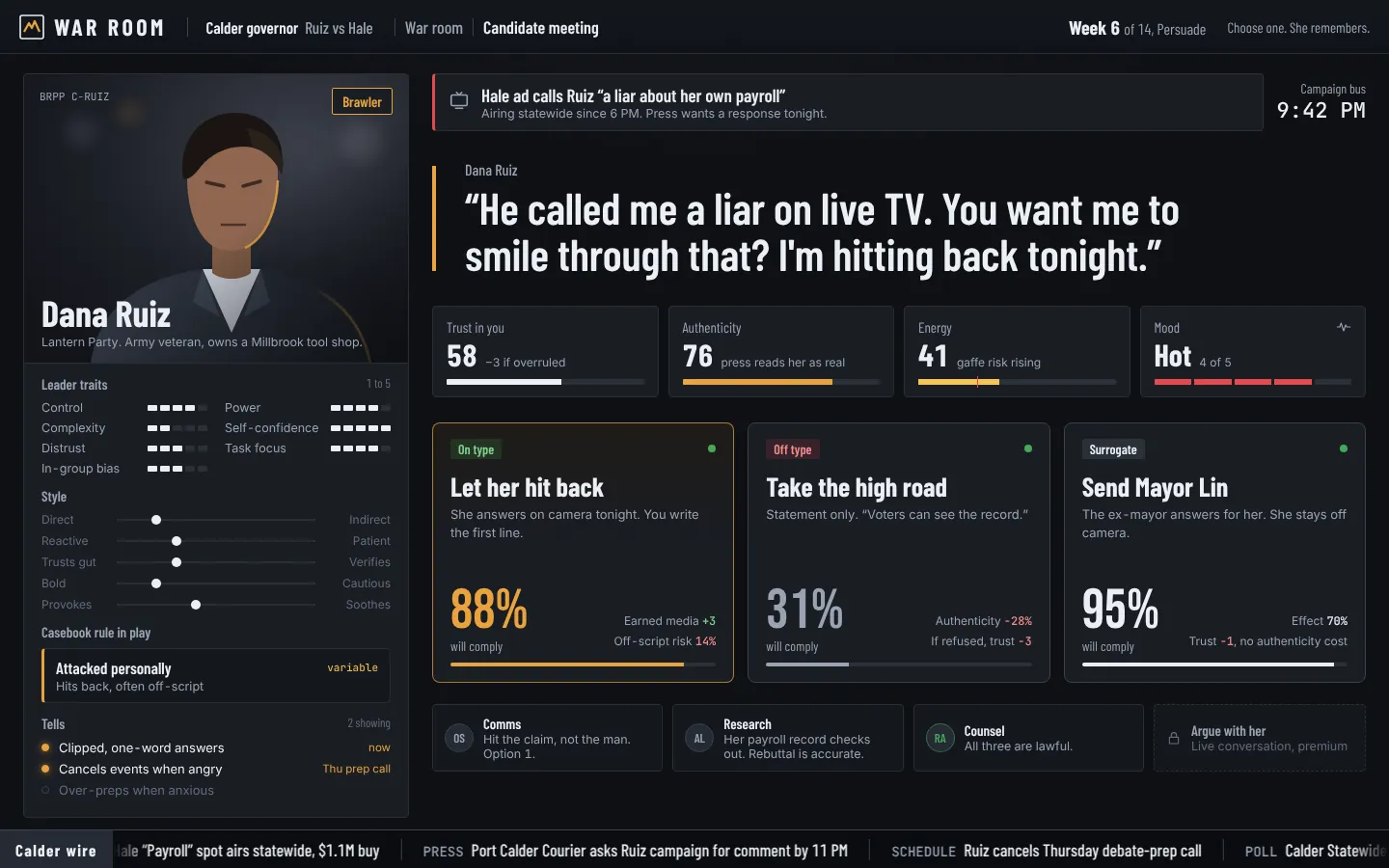
The candidate is a person, not a cursor. She wants to hit back on live TV. Each option shows how likely she is to go along and what it costs. 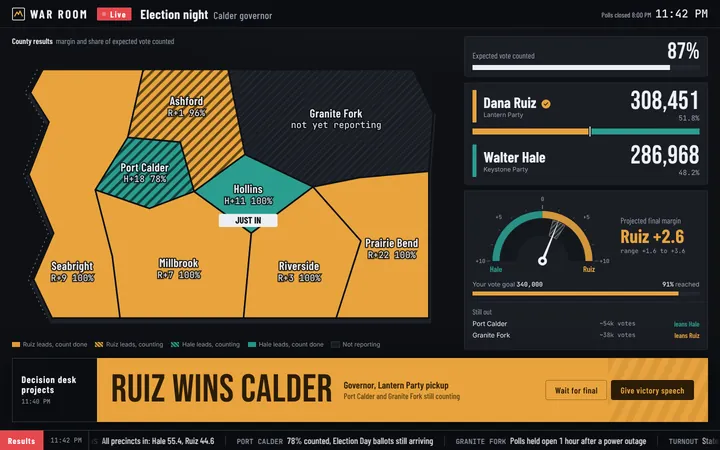
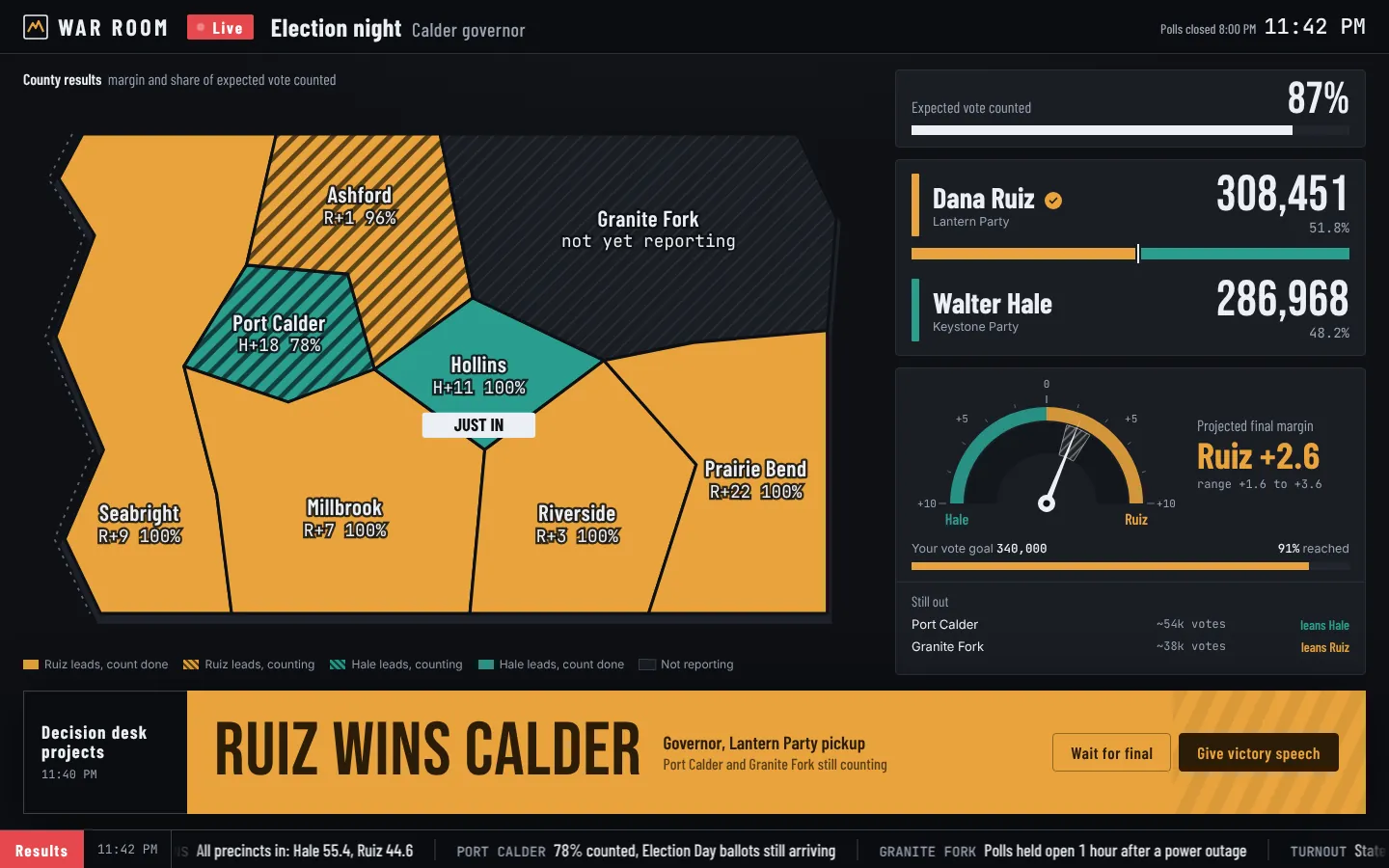
Election night. Counties fill in as the count comes in, and you find out whether you read the electorate right. 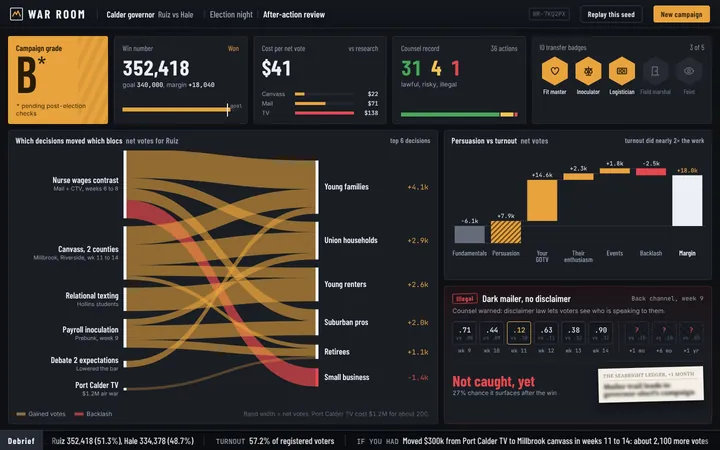
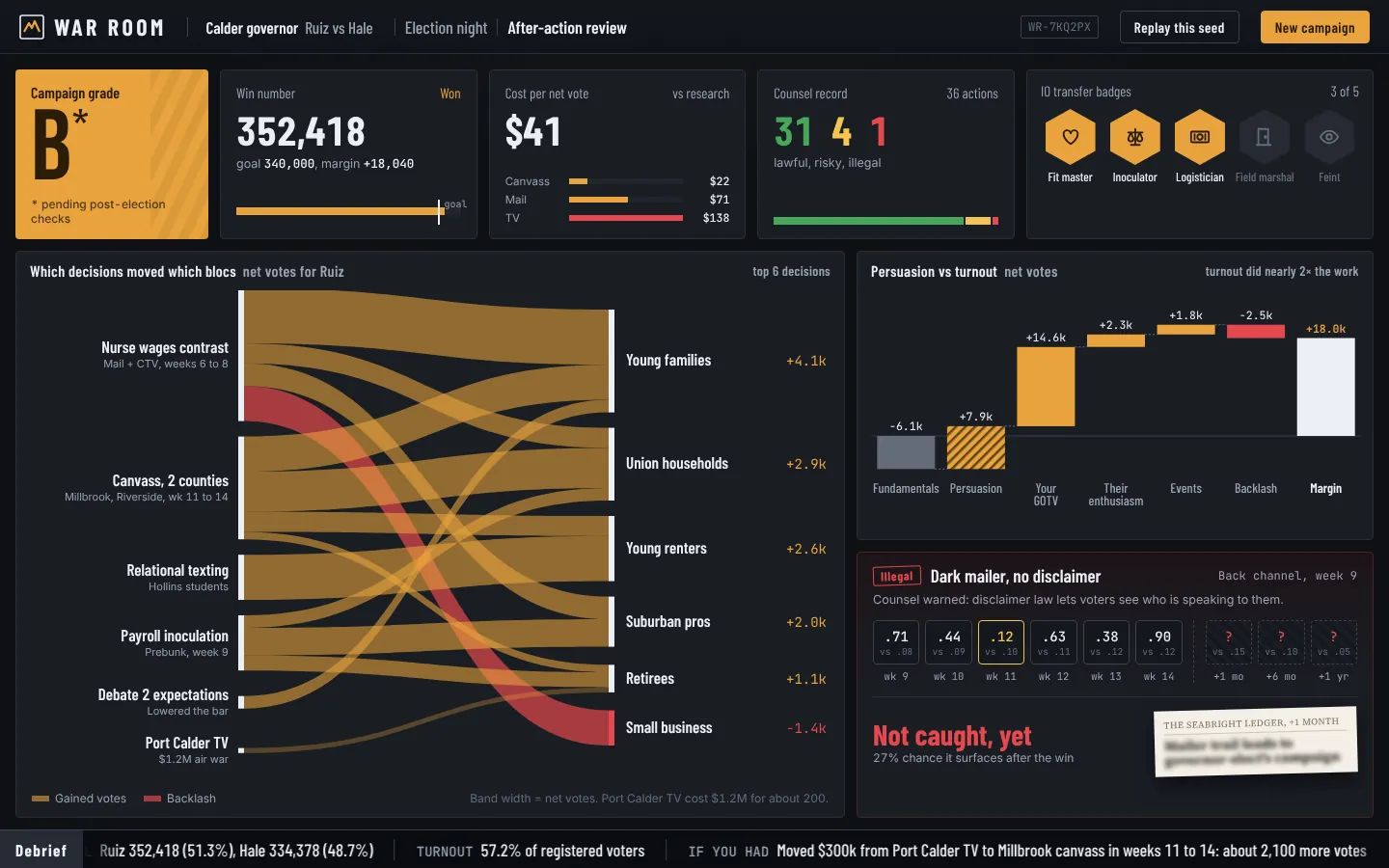
The after-action review shows which decisions moved which voter blocs, and how much of the result came from turnout versus persuasion.
A week in the war room
Each week takes two or three minutes. Fourteen of them make a campaign.
Read the race
Polls come with error bars and a house lean. Your own canvass data is the only thing you can really trust.
Spend the week
Decide where every dollar and volunteer hour goes: persuasion, turnout, fundraising or field offices.
Handle the candidate
Write the message and prep the candidate. Some advice she takes, some she bends, some she refuses.
Count and review
On election night the map fills in. The after-action review shows what worked and what you missed.
Campaign math built on published research
The game's numbers are game-balance values, but their shape follows what political scientists have measured. A few examples:
| In the game | Why |
|---|---|
| Persuasion is small and hard | A large review of field experiments put the average effect of campaign contact and ads on candidate choice in general elections at about zero, with narrow exceptions. (Kalla and Broockman, 2018) |
| Ad effects fade fast | Most of an ad's persuasive effect decays quickly, so timing matters as much as money. (Hill, Lo, Vavreck and Zaller, 2013) |
| Turnout is the cheaper vote | Door-to-door canvassing has been estimated at roughly $19 per added vote, cheaper than mail or phones. (Green and Gerber, via the Chronicle of Philanthropy) |
| Polls are noisier than they look | The margin of error on a lead is generally about twice the margin for one candidate, so a two-point lead is often no lead at all. (Pew Research Center) |
| Attack ads are not a cheat code | A meta-analysis found negative ads no more effective than positive ones. In the game they drain enthusiasm and carry backlash risk instead. (Lau and others, 1999) |
| Debates are mostly risk | Studies find debates rarely change outcomes, so a gaffe costs more than a good night gains. (Scientific American) |
The legal line. Hard-hitting contrast is legal and in the game. Dirty tricks are possible but risky, with a hidden chance of exposure, and a Counsel adviser tells you where the legal line is and why. Deceiving voters about when, where or how to vote is a crime, and the game treats it as one.
The state, candidates, parties and places are fictional. Party colors are neutral on purpose.
Join the playtest list
War Room is in development. Leave your email and we will invite you when there is a build to test.